


beduAgentic AI platform for companies in the Gulf
- Role
- Product Designer & UX/UI
- Years
- 2025–26
- Team
- Solo
One place to run a team of AI agents
Bedu is an agentic AI platform for companies in the UAE and the Gulf. I rebranded the company, then redesigned the product around the agent and built its design system.
Overview
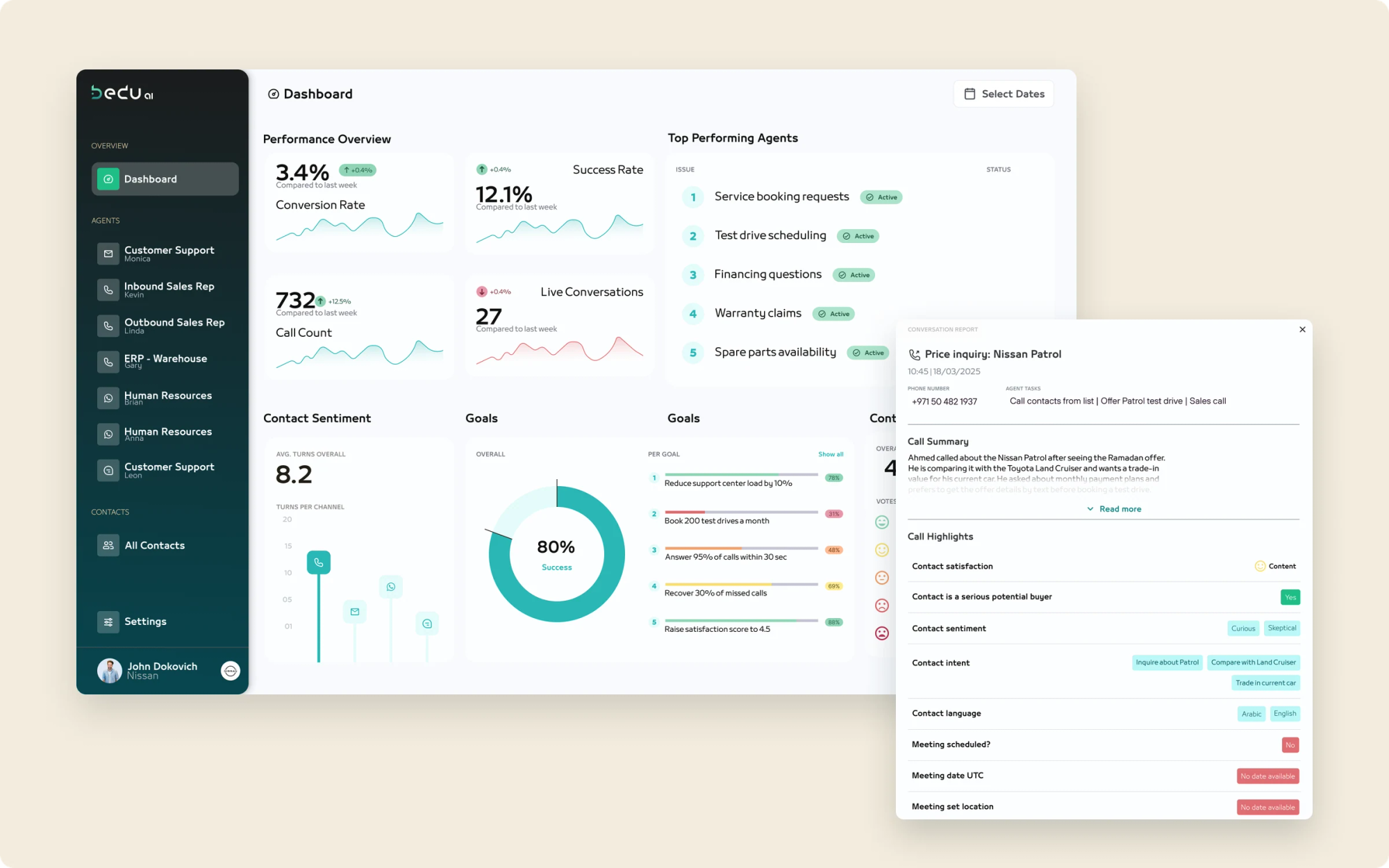
Bedu.ai is an agentic network management platform: one place where companies across industries run and oversee all their AI agents. A company can run several agents at once, from customer support to sales and HR. Each one takes calls, works through tasks and talks to hundreds of contacts, and someone has to keep track of all of it.
What Bedu asked for
Bedu’s platform was built by developers on a generic component library. It worked, but it looked and felt half-baked. They came with three asks:
- A product that looks and feels up to market standards.
- A simpler UI and simpler flows, so it feels easy to use.
- An MVP that’s easy to scale, with room to add features later.
Each ask became one core decision.
A design system built on the new brand
- The ask: a product that looks and feels up to market standards.
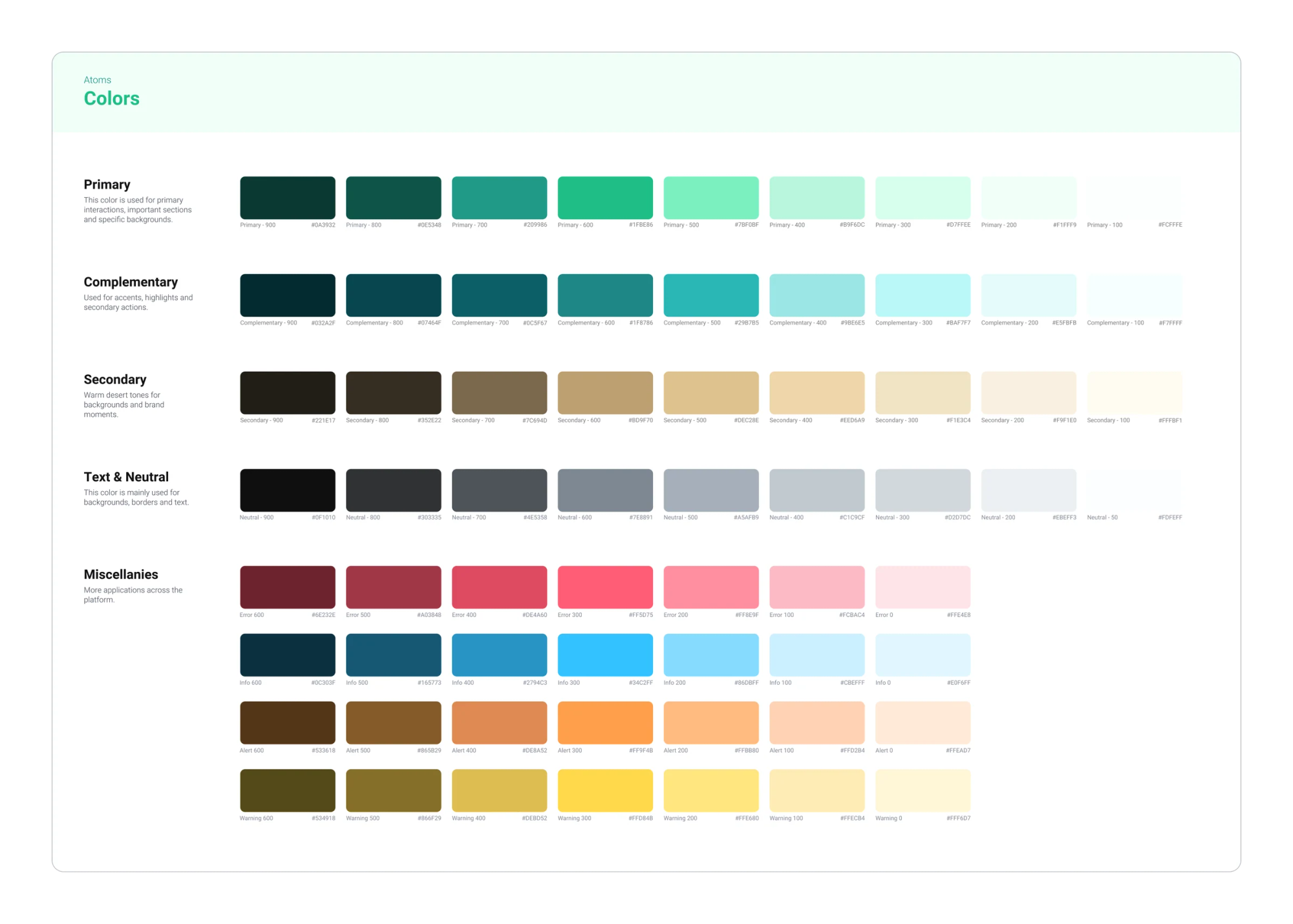
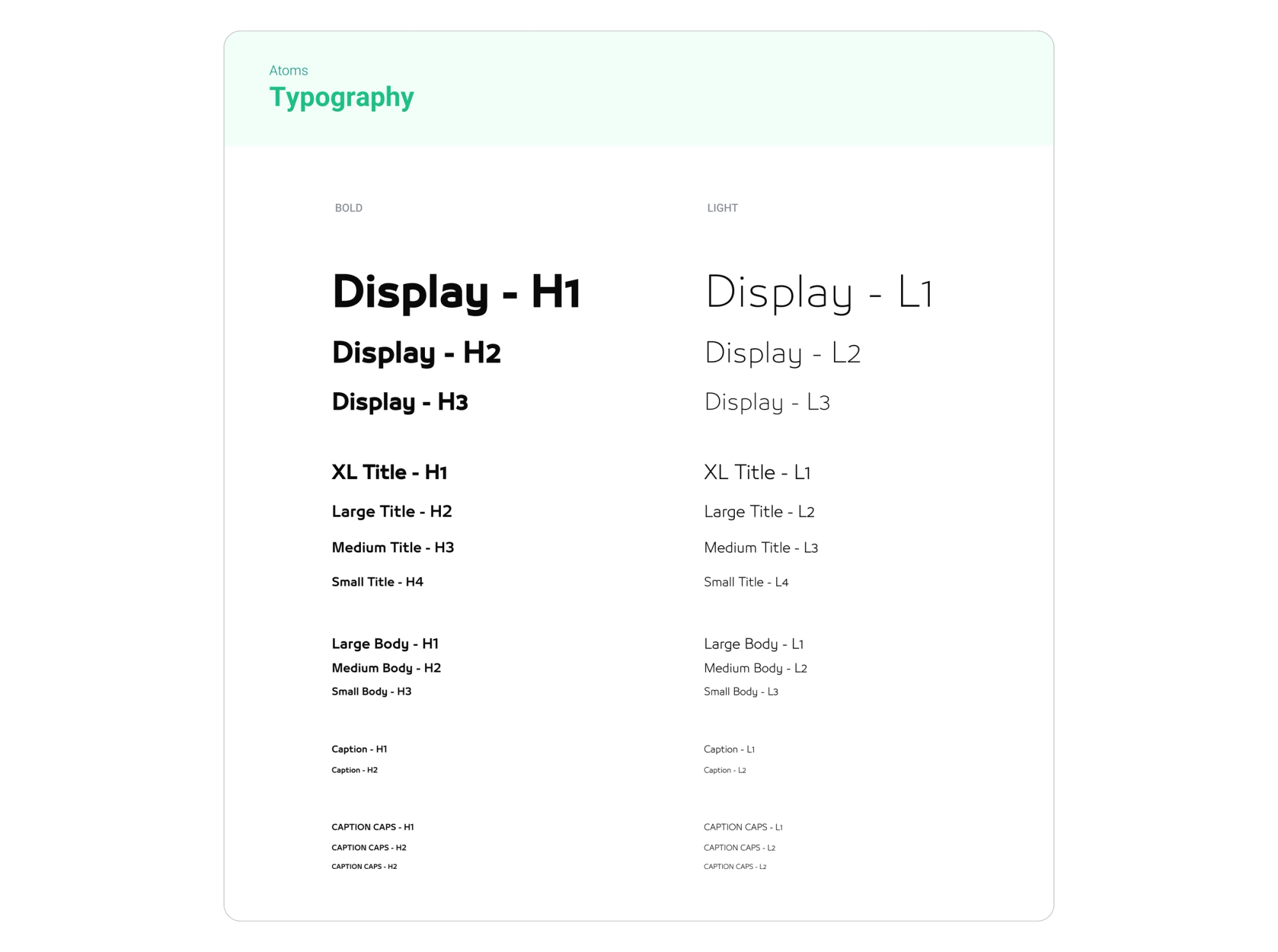
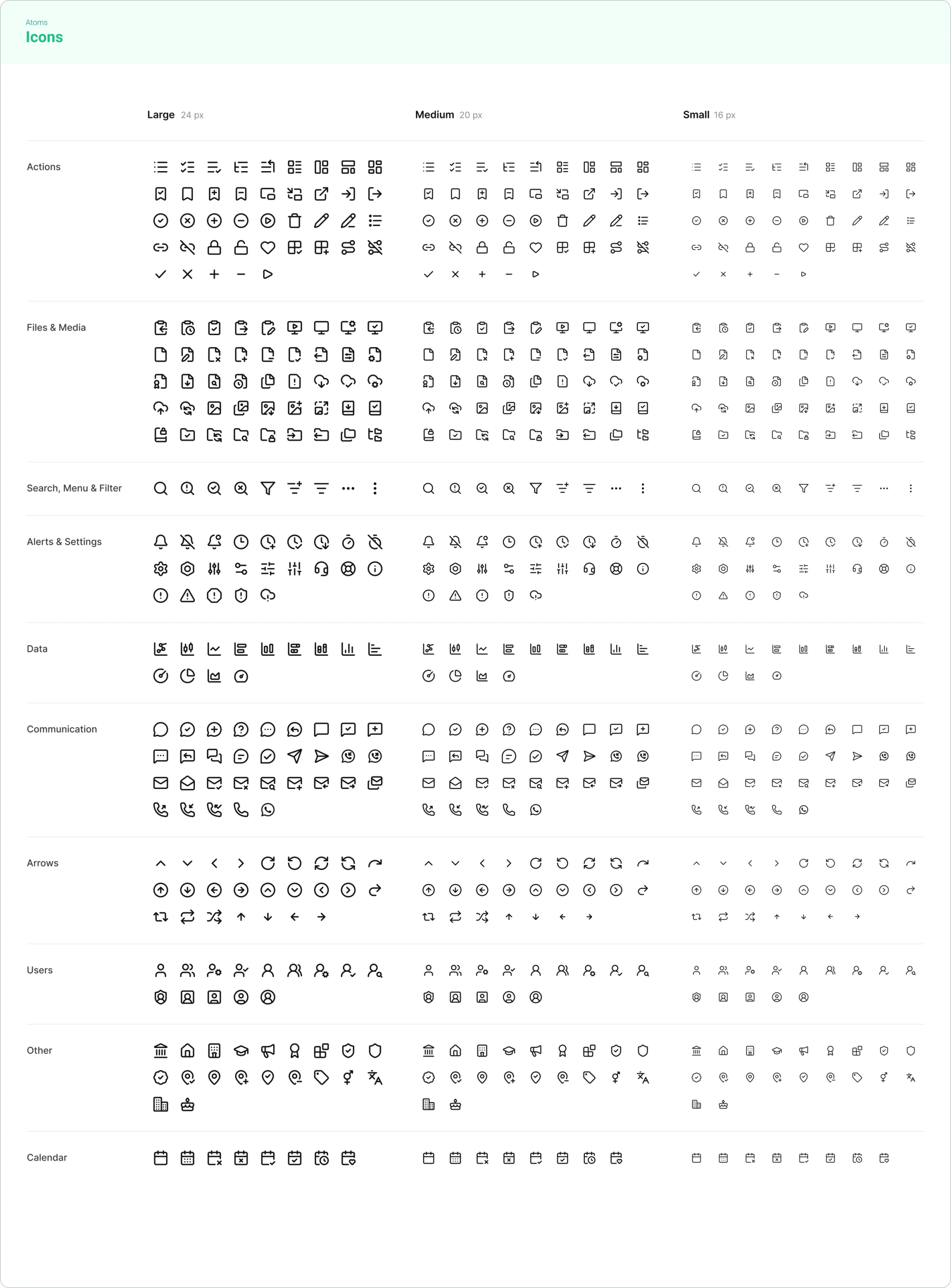
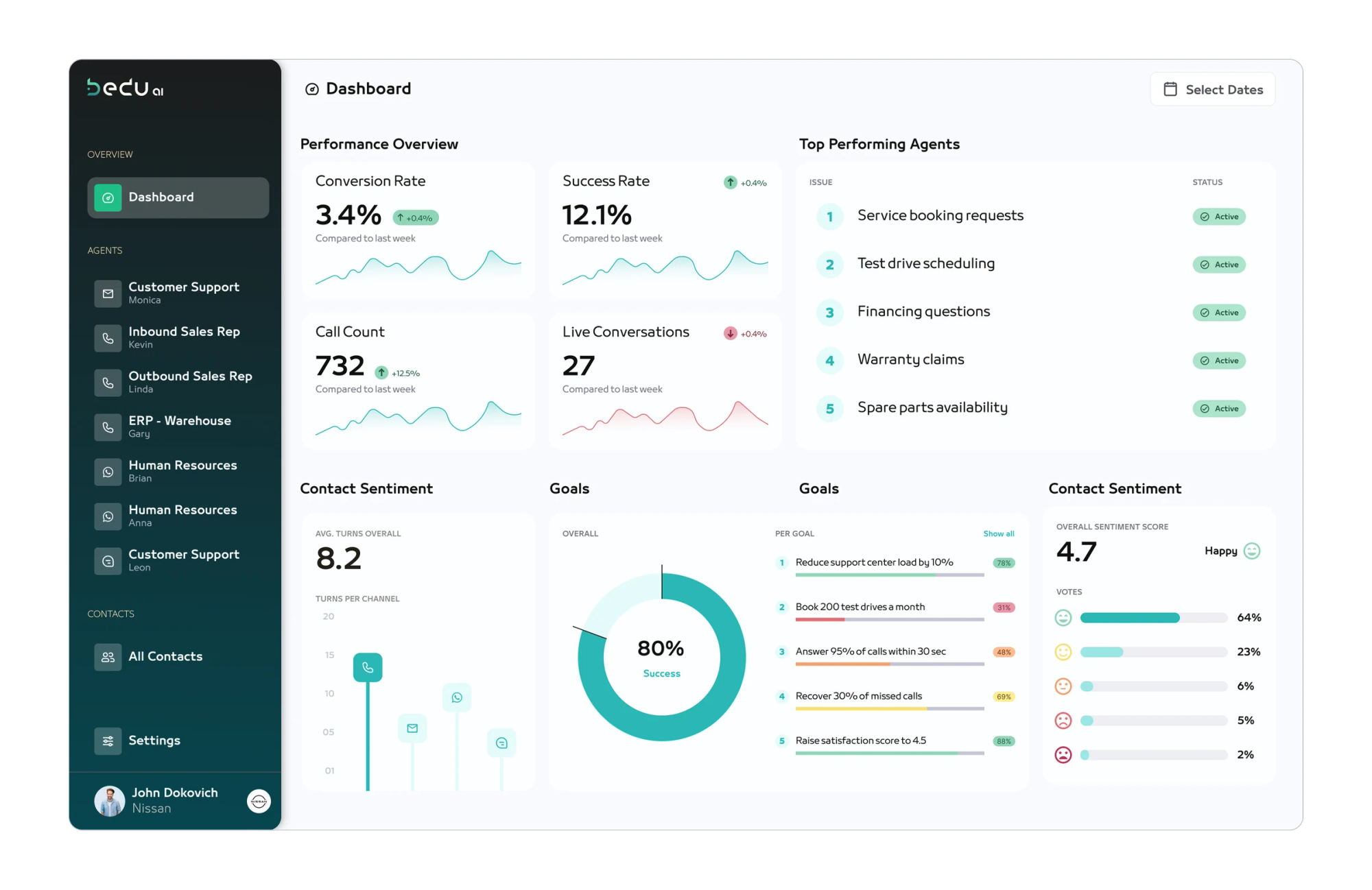
I replaced the generic library with a design system built on the new brand: type, icons, components, grids and the “Desert Jade” colours. Every screen draws from the same parts, so the UI stays modern and consistent as the product grows. The developers also got one organised Figma file with the whole design system and every screen design in one place.
Less clutter, simpler navigation
- The ask: a simpler UI and simpler flows.
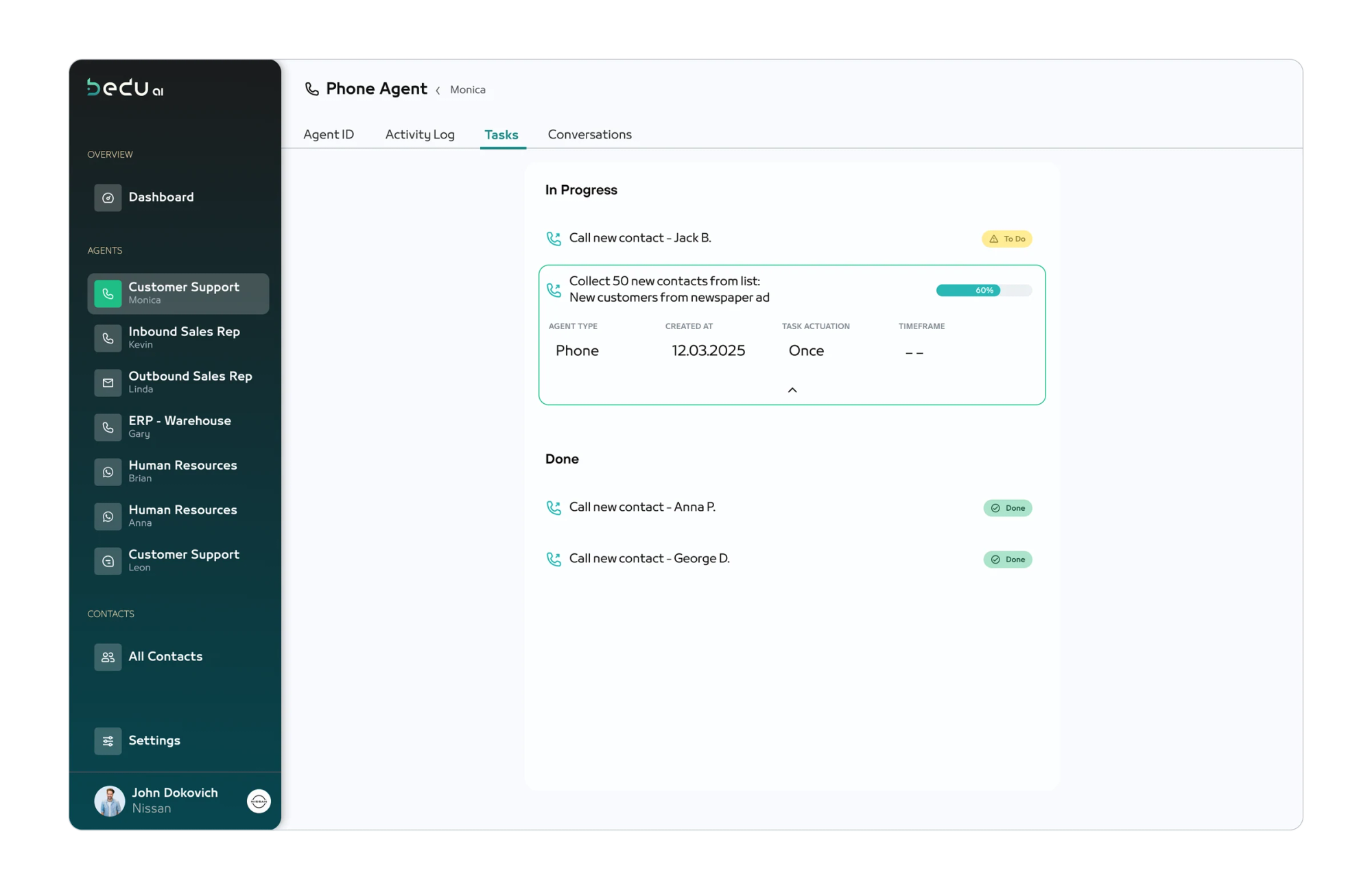
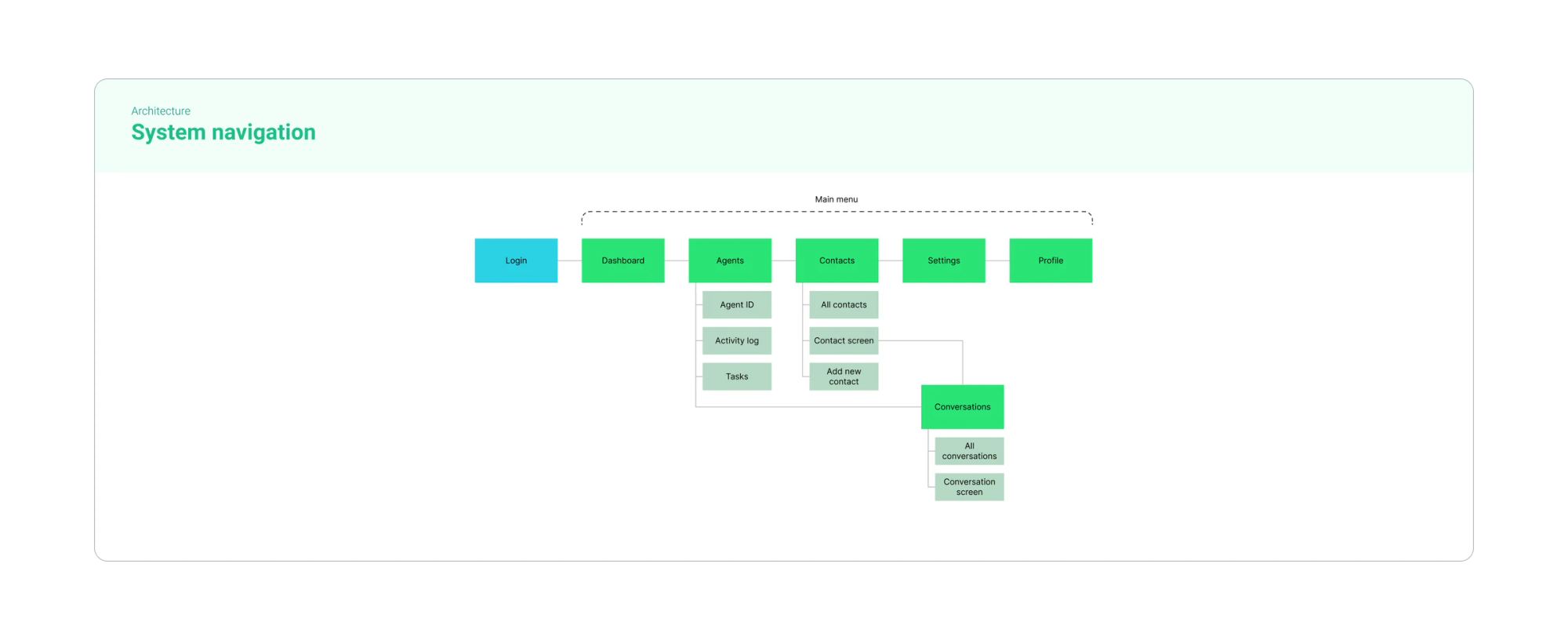
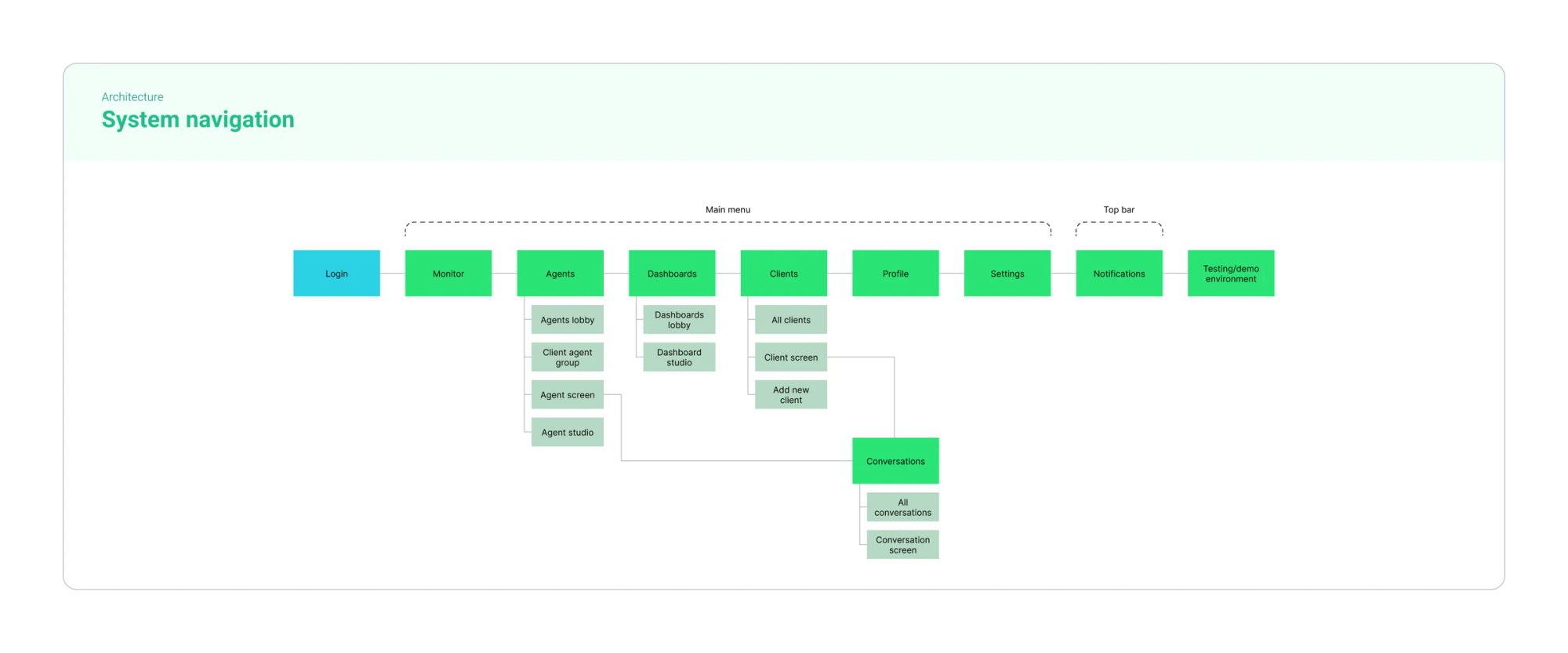
The old menu stacked seven items together at the top, and Agents opened a second menu that took a lot of width and added a step before reaching any agent. I re-mapped it into three labelled sections, Overview, Agents and Contacts, with Settings at the bottom. Every agent is now one click away.
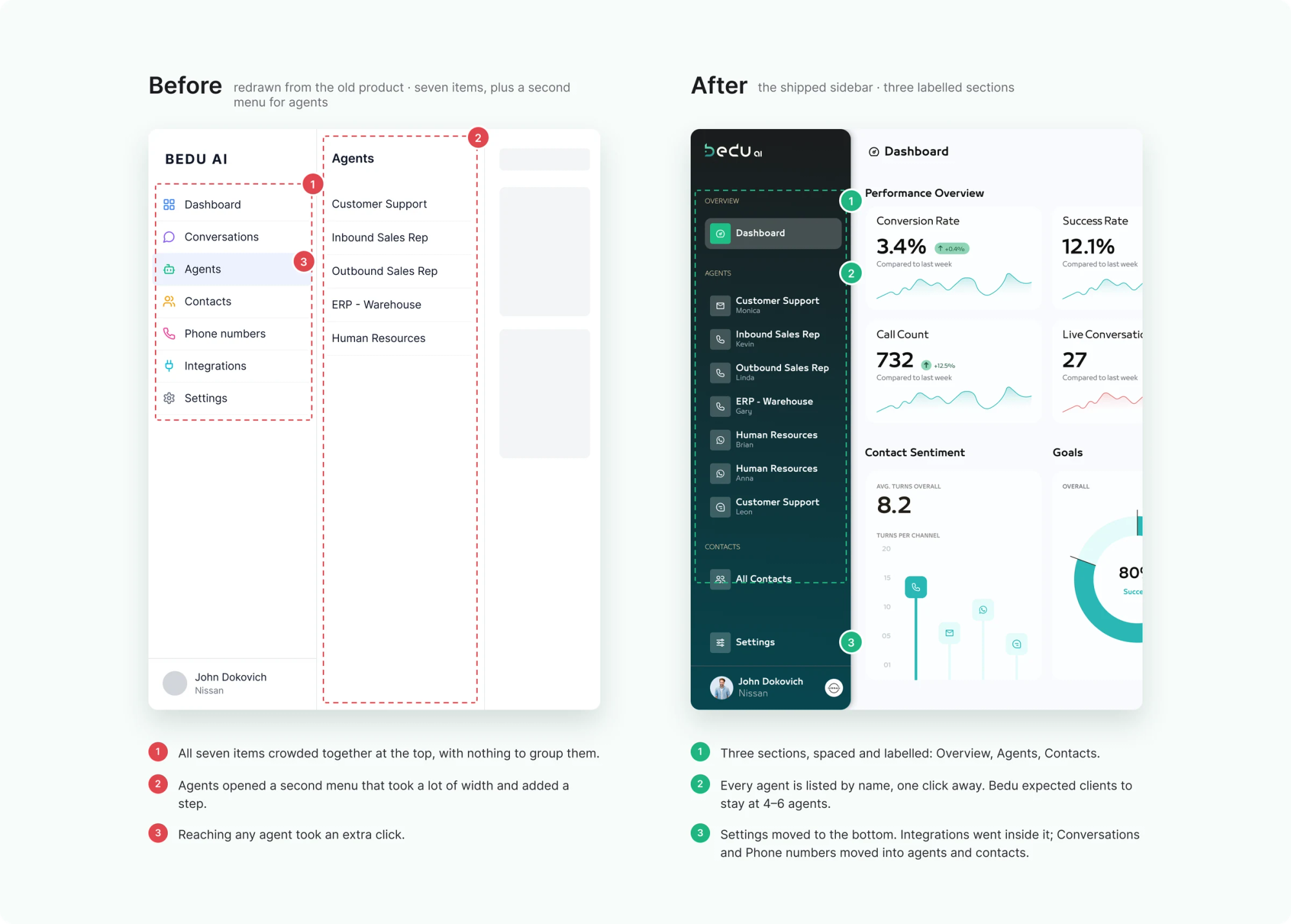
Listing every agent was a deliberate bet: Bedu expected clients to stay at 4–6 agents for a long time. The other items found better homes. Conversations, the bridge between agents and contacts, now lives inside both. Integrations moved into Settings, and Phone numbers into agents and contacts.
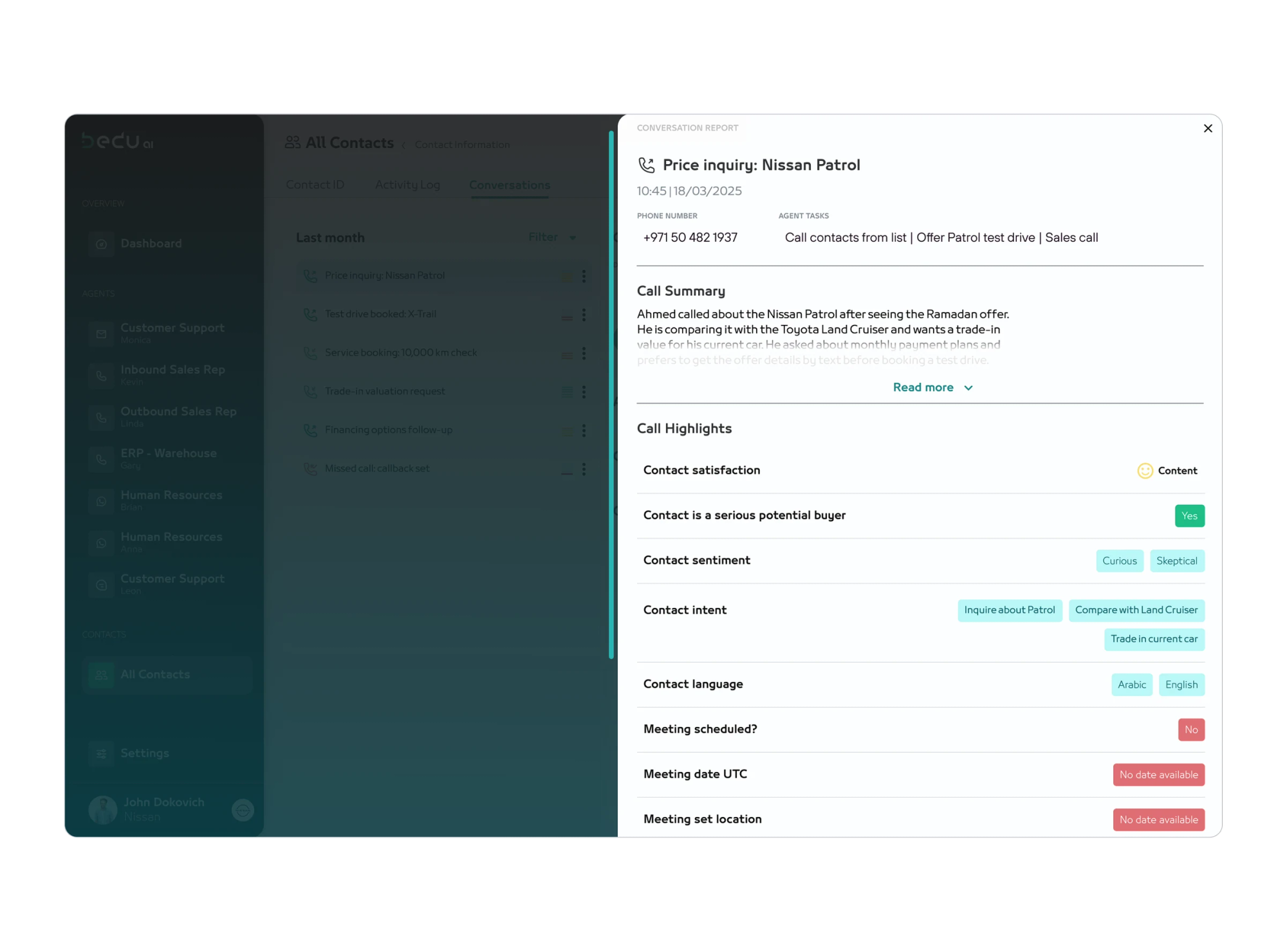
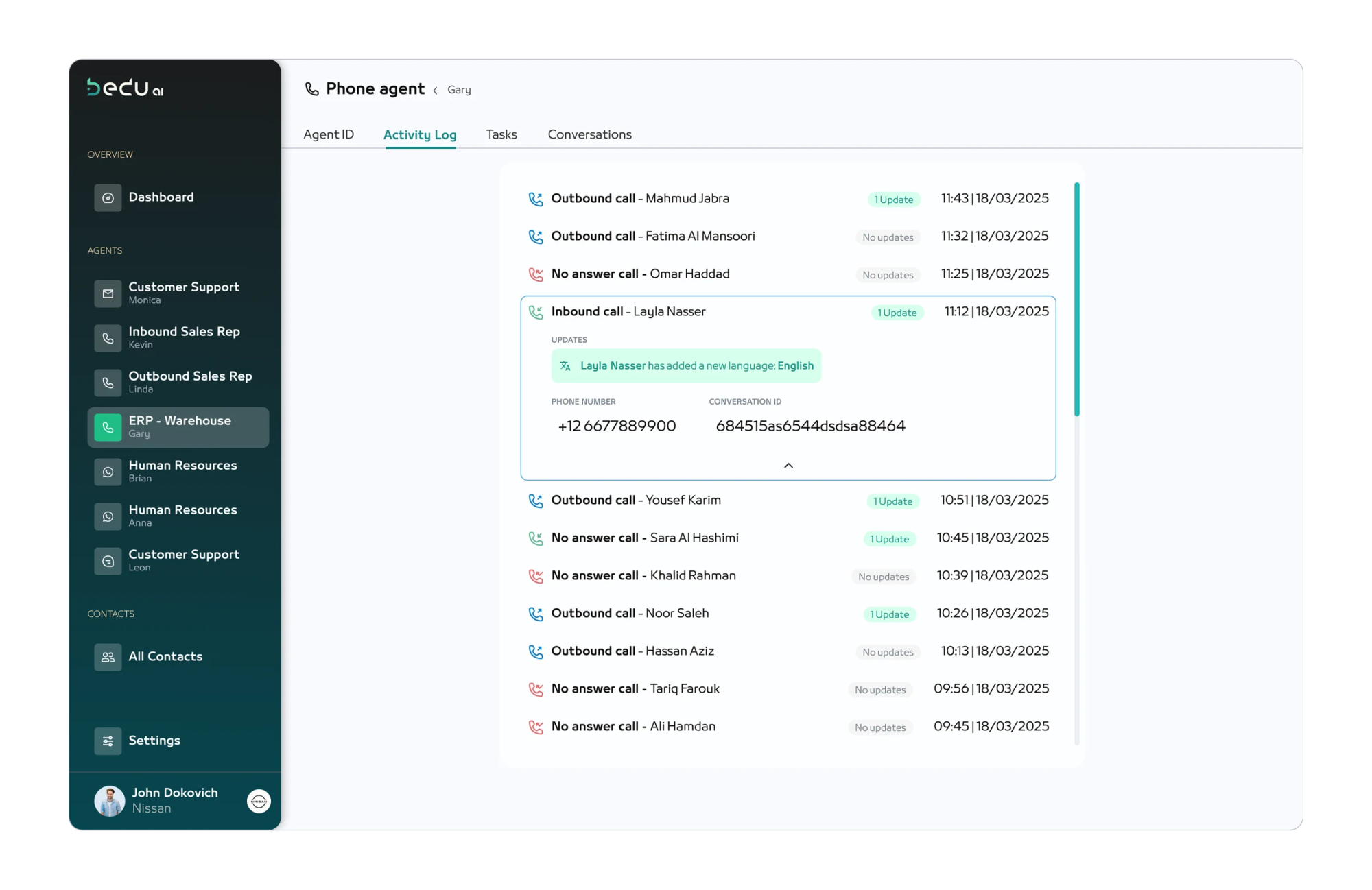
Inside the screens, the call report turns each call’s highlights into labelled chips: sentiment, intent, language and whether a meeting was booked. A manager can judge a call without reading it.
The agent as the root of all the data
- The ask: an MVP that’s easy to scale.
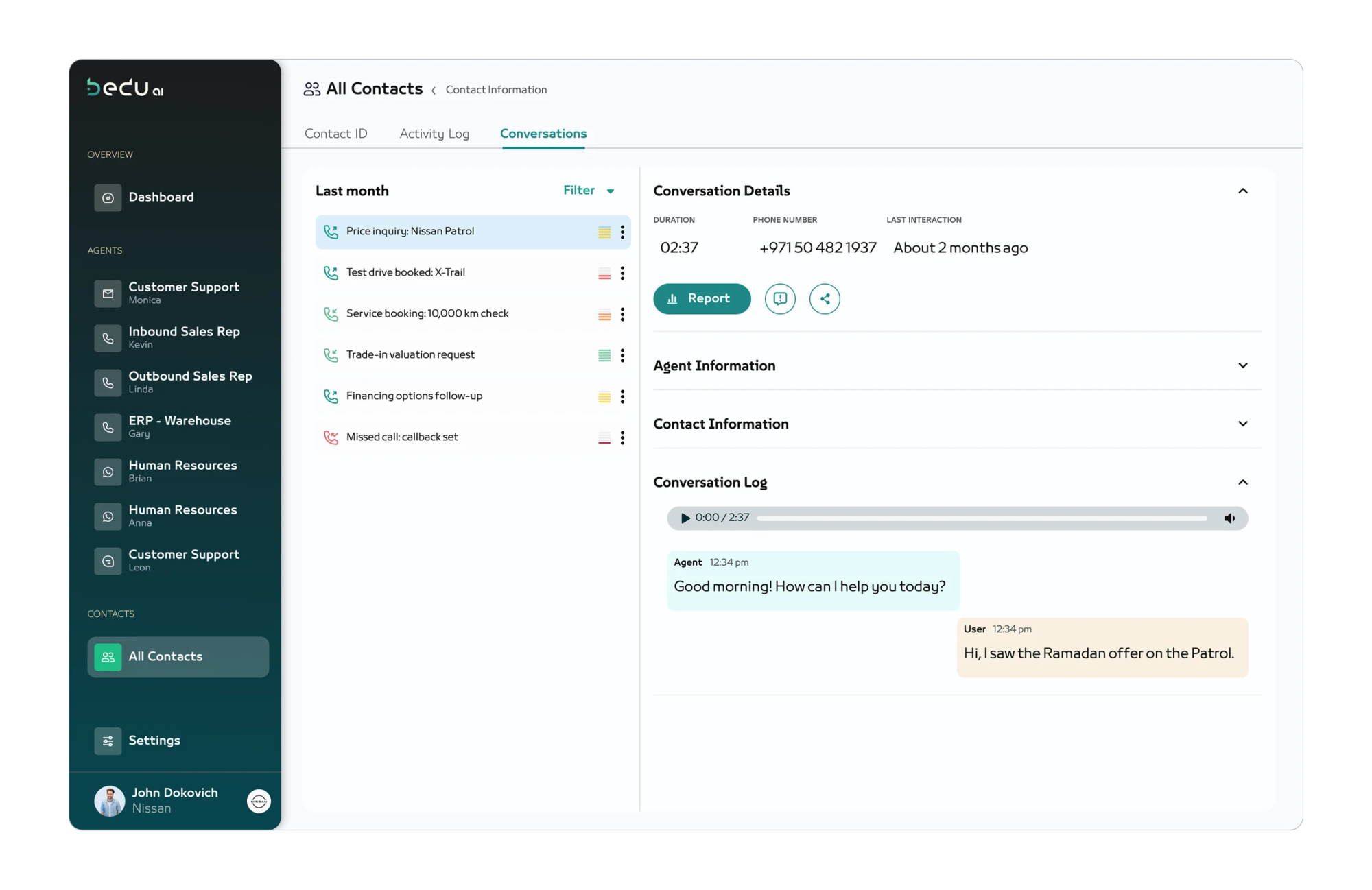
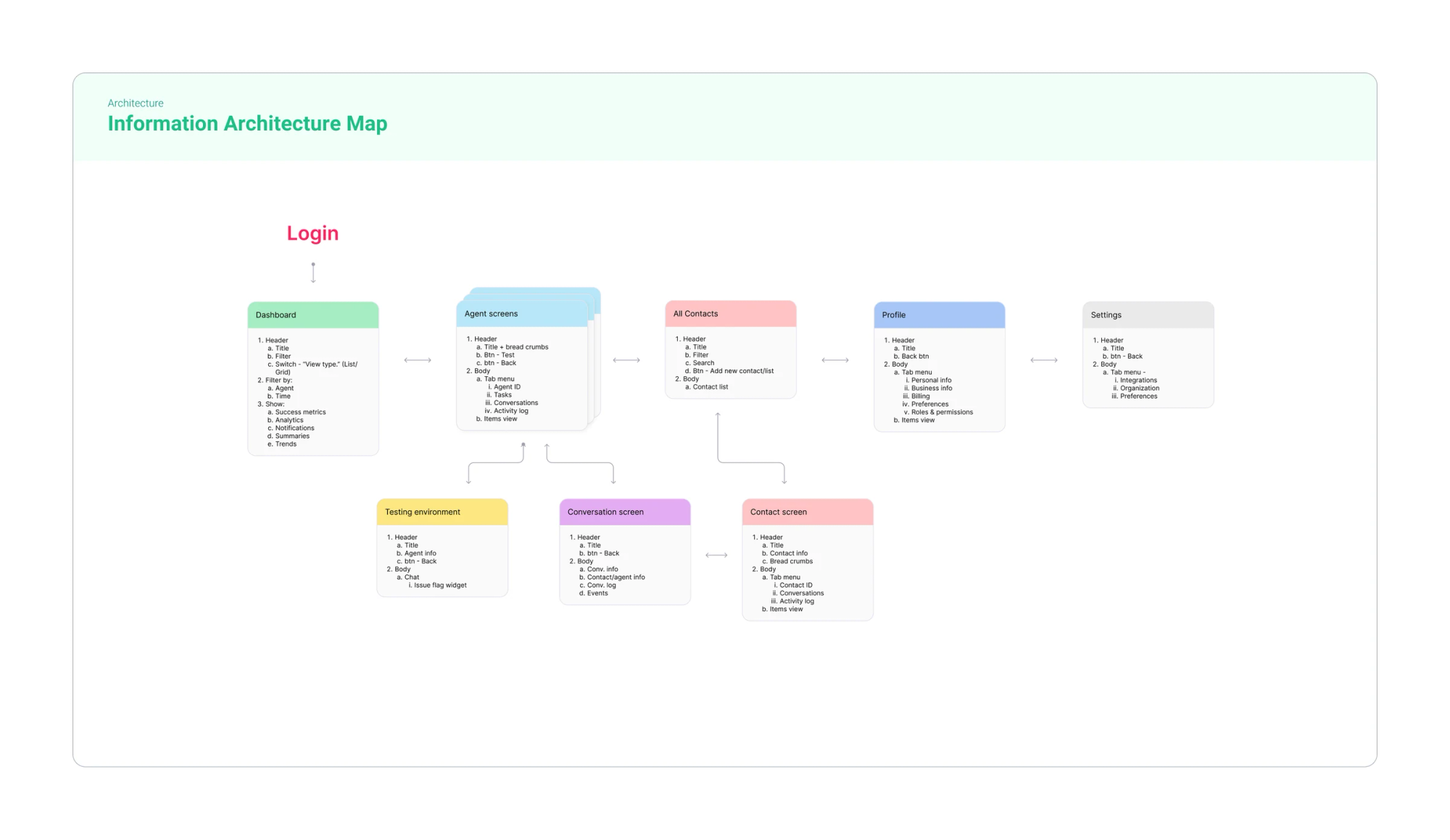
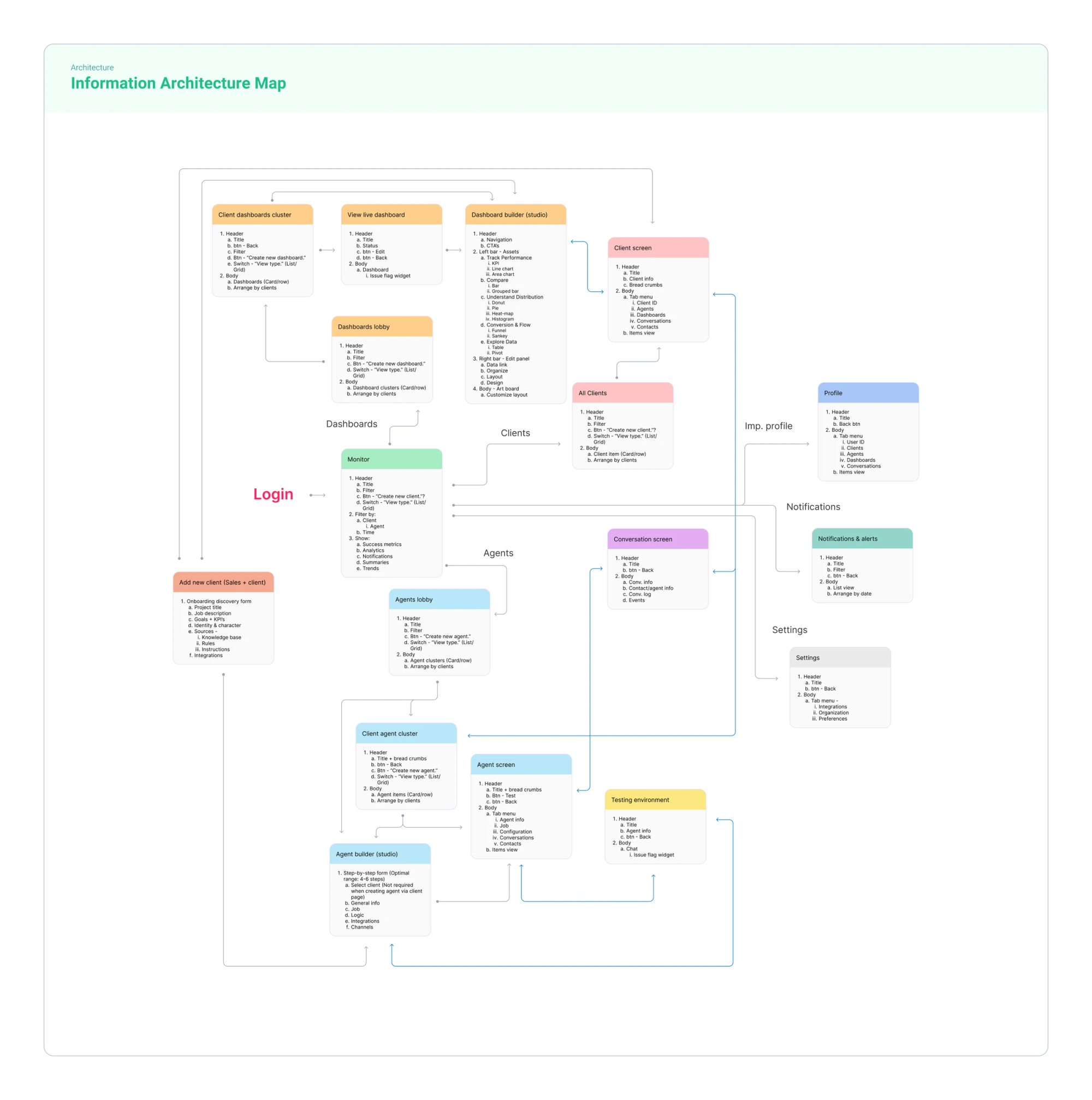
I made the agent the main entity that all the data hangs from: its calls, tasks, conversations and activity. Contacts connect through the agent, in the conversations they have together or the tasks that involve them. Agents and contacts sit in the side menu, and everything about one of them opens in tabs at the top. A new feature becomes a new tab, not a new menu item, so the product can grow without getting more complex.
The next phase was already planned: an agents lobby with sub-agents, and an admin view where Bedu’s team manages multiple clients. It only got as far as planning and wireframes.
A brand that belongs in the category
Bedu’s old brand came from a former parent company and didn’t look like an AI company. The new logo moves from square capitals to wide, rounded lower case that borrows from Arabic letterforms, and the “Desert Jade” palette carries it across the product, website and collateral.

Outcome
The new brand brought in 50+ leads, and 5 of them became design partners.
The product work outlived the screens. The design system and information architecture became the structure and guidelines for an AI agent that builds and customises the system configuration for each client. The same rules that keep the UI consistent now guide the AI.
If I’d kept working on it
I’d expand the design system into a bigger asset bank for the AI to draw from, to cut down the generic, off-brand output it often produced. I’d also interview operators and clients after launch, to get early feedback on the impact.