


ZestaAI production app for creators
- Role
- Lead Product Designer
- Years
- 2024–26
- Team
- 5 people
Getting creators from sign-up to their first finished video
Zesta.ai is a creative production app that amplifies the quality & quantity of creators content, allowing them as creators to focus on being the talent. Once we launched, we saw big drops during onboarding, and new users were leaving before they made anything.
Overview
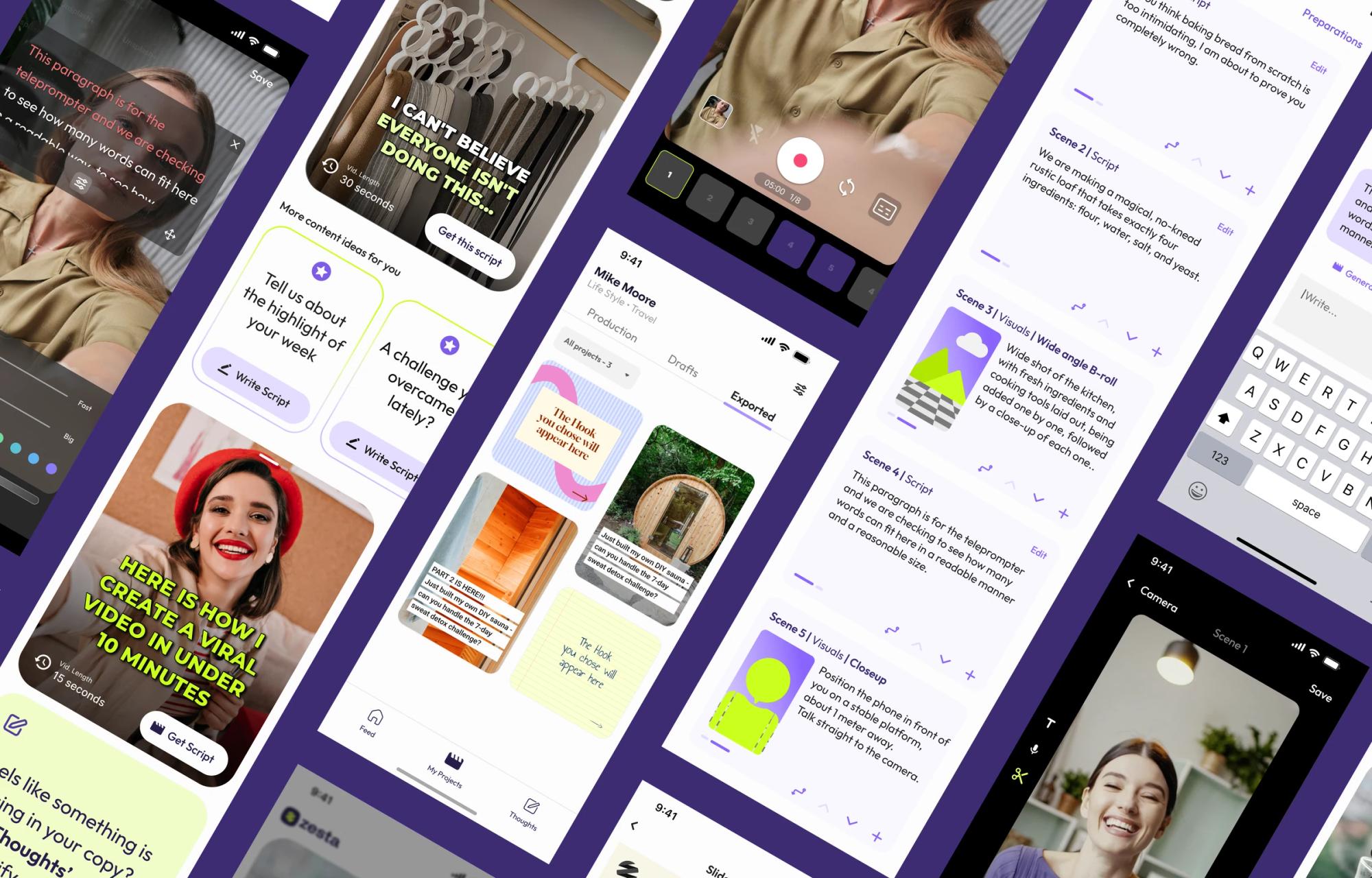
Zesta works like an in-house creative team for a solo creator. It finds trends, writes the hook and script, then guides you through filming and editing on your phone. The product worked. The problem was that most people never reached the part where it worked.
I was the only product designer, and I owned the experience end to end. The work followed the user’s path in three stages: getting through onboarding, making a first video and then another, and paying. Each stage had its own drop-offs, its own fixes and its own numbers.
We spent almost a year building the app and testing it with beta users. The first months after launch went into hard fixes. The work below came after that, in the 8 months after launch.
- Sign-up completion58% → 77%Top-quartile benchmark 55%
- New users who write a first script31% → 47%Benchmark 25–40%
- Users who finish a video4% → 15–17%About 4×
- Trial starts on the carousel paywall18% → 33%
- Creators back in week one67%50% for all new users · creative-app benchmark 33.9%
Data: Zesta product analytics. Benchmarks: Produktly, AppStorys, Mixpanel.
“Ron joined us as part of the founding team when the project was still in its very early stages. Thanks to our work together, his dedication, and his ability to see the bigger picture, we turned an early idea into a profitable app with tens of thousands of users. Ron's contribution went far beyond UX and UI. He was a true partner throughout the journey, influencing every part of the project, from product and marketing to strategy, always thinking a few steps ahead.”
Onboarding: two steps were losing most of our users
Analytics showed the drop, and session recordings showed exactly where people stopped: on the very first sign-up step, and again at the Instagram connection right after it.
Sign-up: people didn’t know what they were signing up for
Zesta was a new product, and nobody knew what it was. So I added a 30-second intro video at the very start, the way many games open. A video fits an app that’s all about making videos. It carries more information than tutorial screens, and people watch videos where they skip screens. It can be skipped.
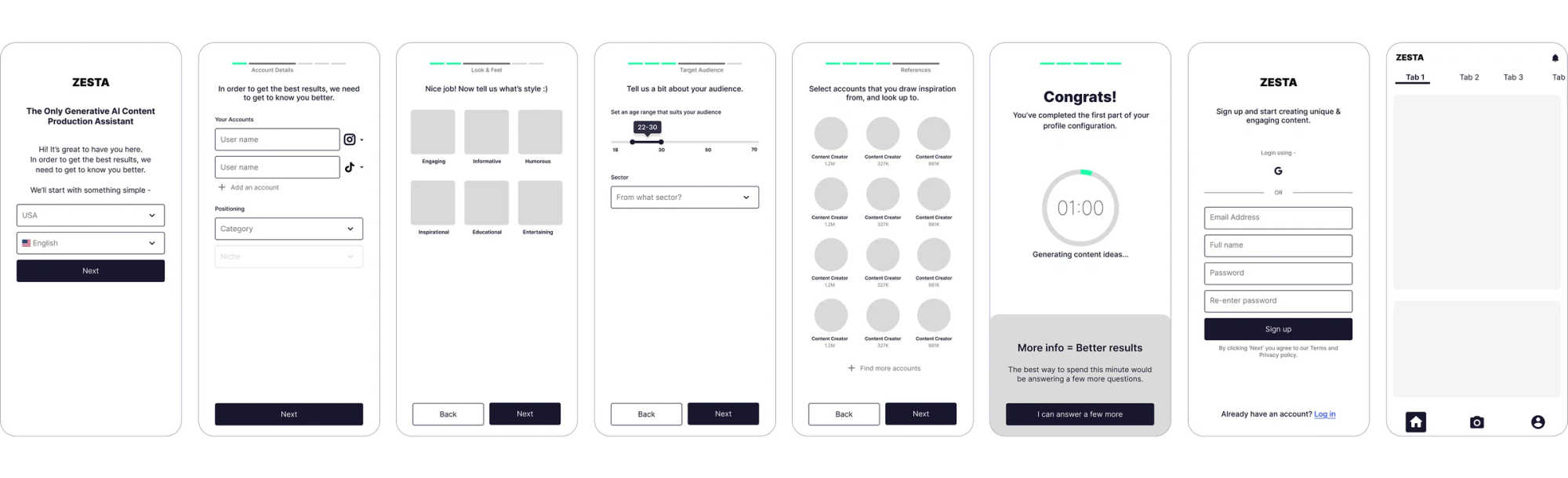
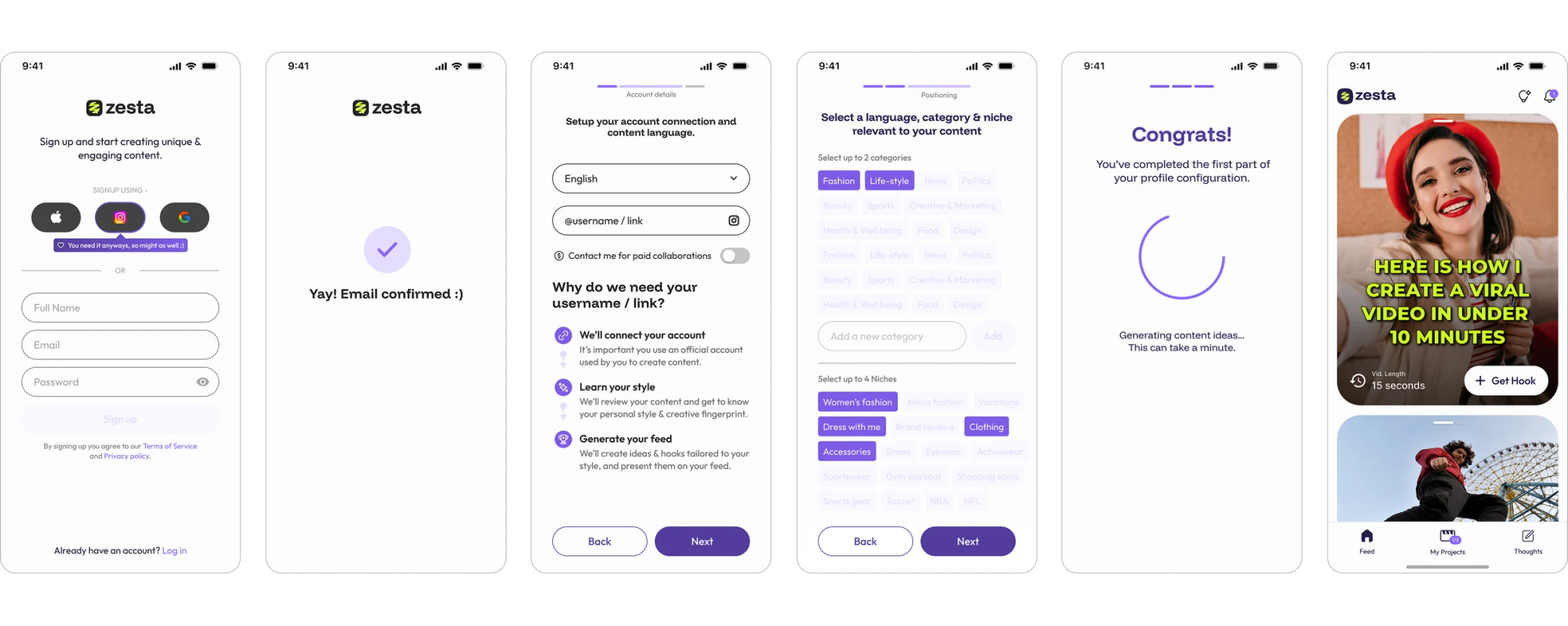
I also cut the steps it takes to start. The plan asked for six fields, a country, a content language and a terms checkbox. What shipped leads with one-tap social login.
Instagram: a scary ask, made too early
Creators protect their accounts, and we asked for access before explaining anything. The fix had three parts:
- Nudge toward one clear path. Connecting is the default, so most people never have to make a decision.
- Take the fear apart. The screen breaks the process into three steps and shows how small the risk is: we only use official accounts, learn your style, and build your feed around it.
- Show why it’s worth it. Advertisers and creator agencies on our platform were struggling to find nano-creators at all. Creators who connected their account and opted in could be matched with them for paid work.
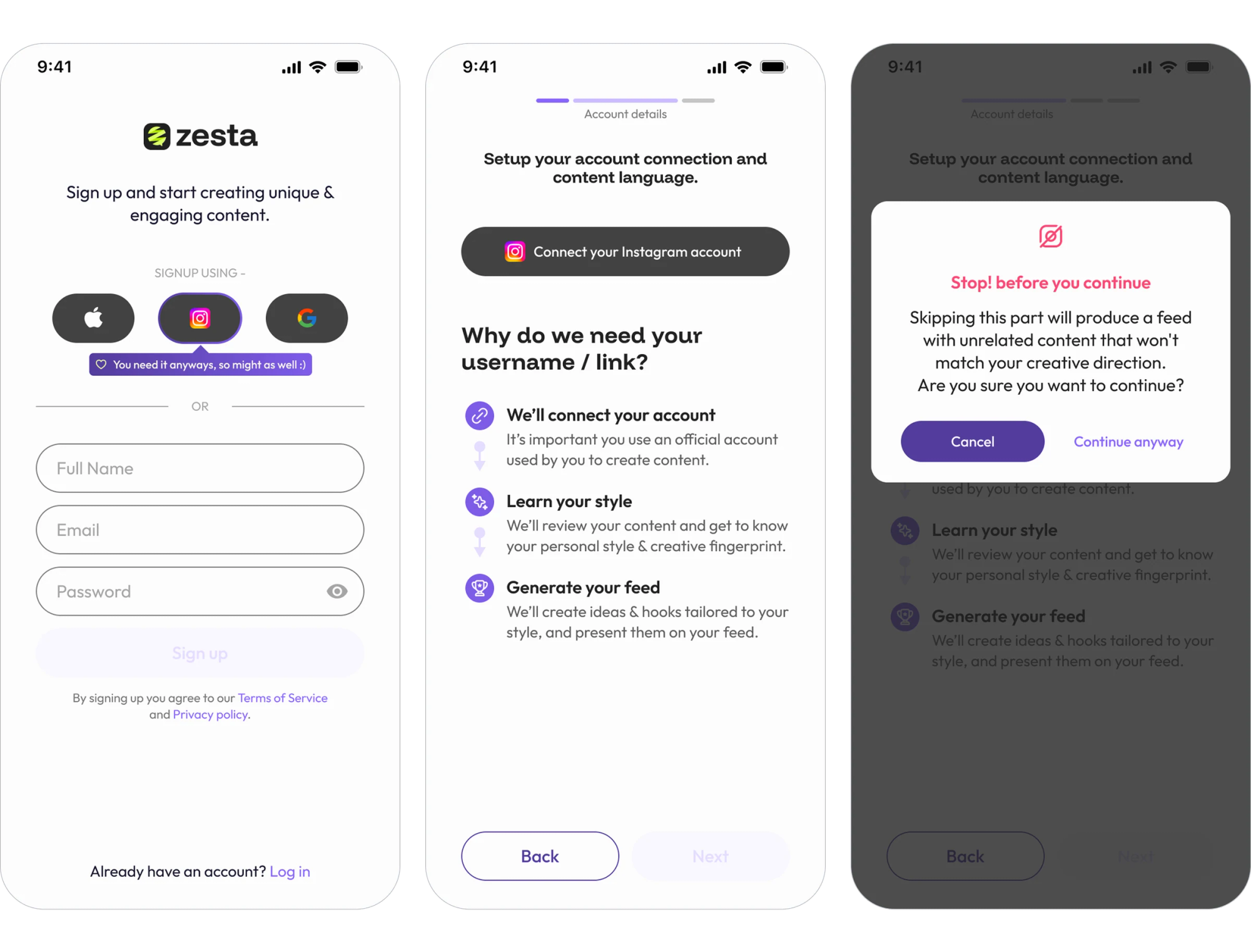
The option we rejected: moving the connection later in the flow. It would have cut friction, but the first thing a new user sees is a feed of hook suggestions. Without their account, we couldn’t learn their style, and the feed came out generic, with no wow effect. A smooth onboarding into a forgettable first impression was the worse trade.
First creation: onboarded users left without making anything
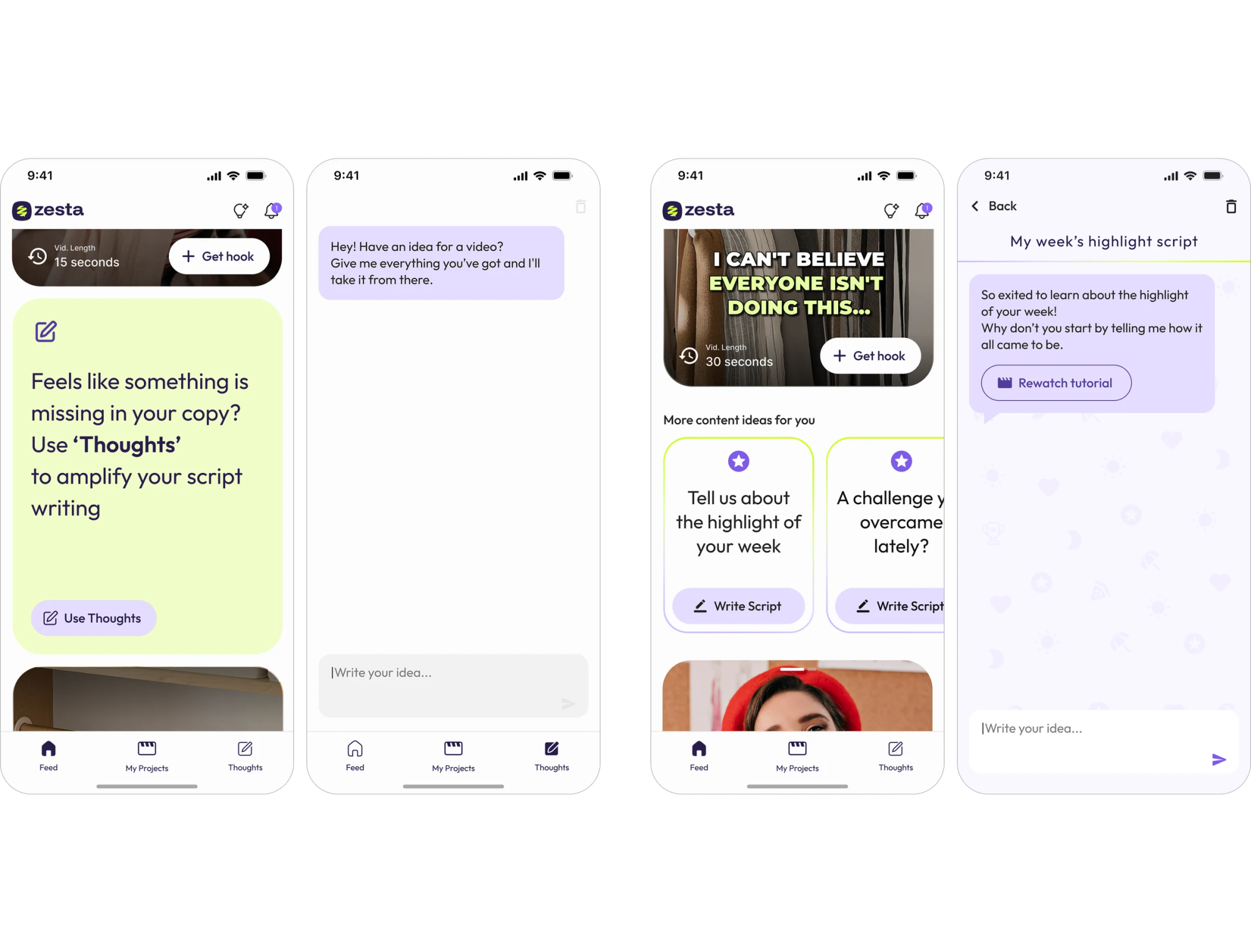
App reviews and conversations with users showed two things. Writing the first script felt hard. And most people never noticed Thoughts, a chat where you share a rough idea and it helps you write the script. So I brought both answers into the feed, as nudges that look and behave like native feed content.
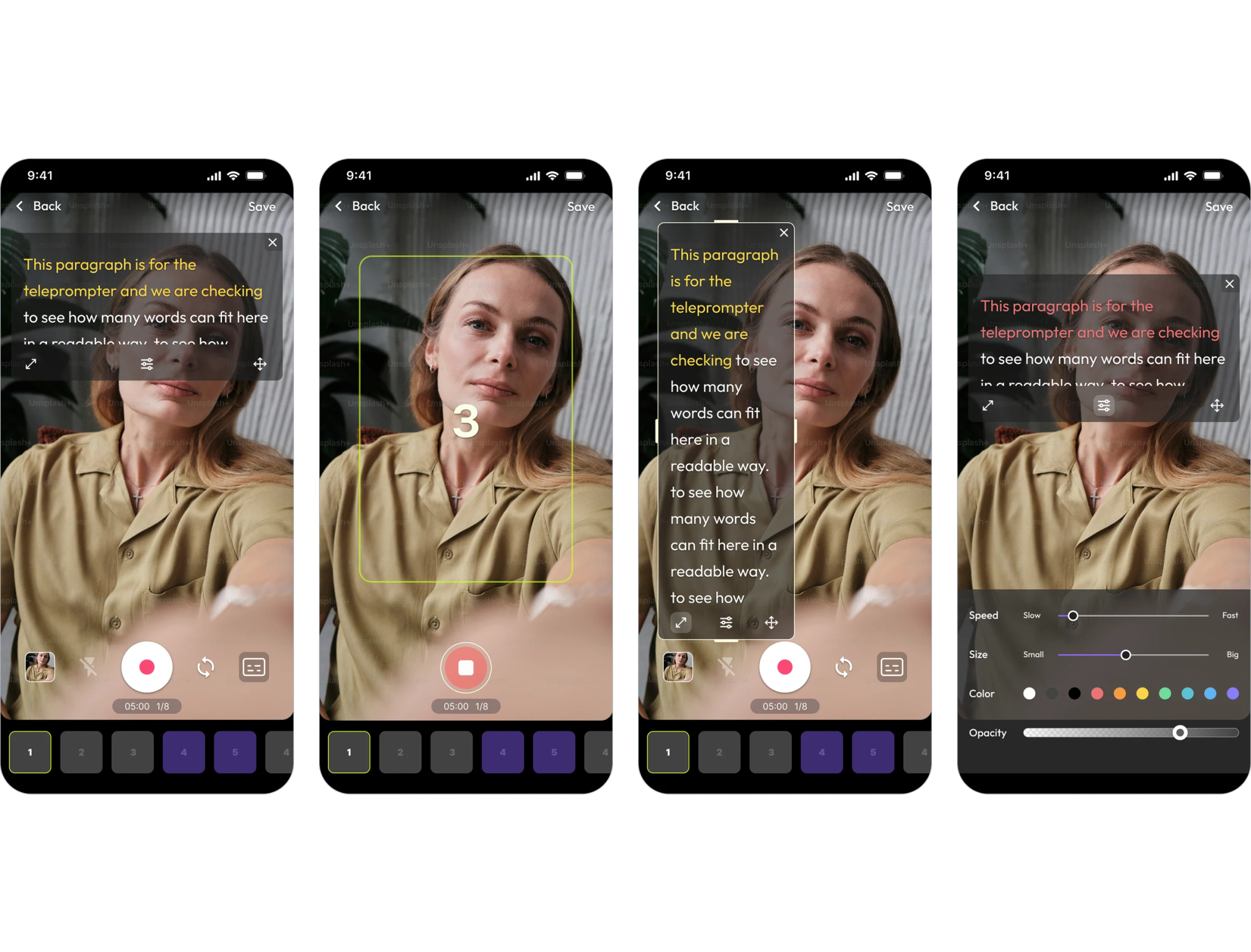
Filming follows the patterns creators already know from TikTok and Instagram: a teleprompter over the lens, a scene strip along the bottom, quick trimming and a framing guide. The goal was no learning curve between a script and a finished take.
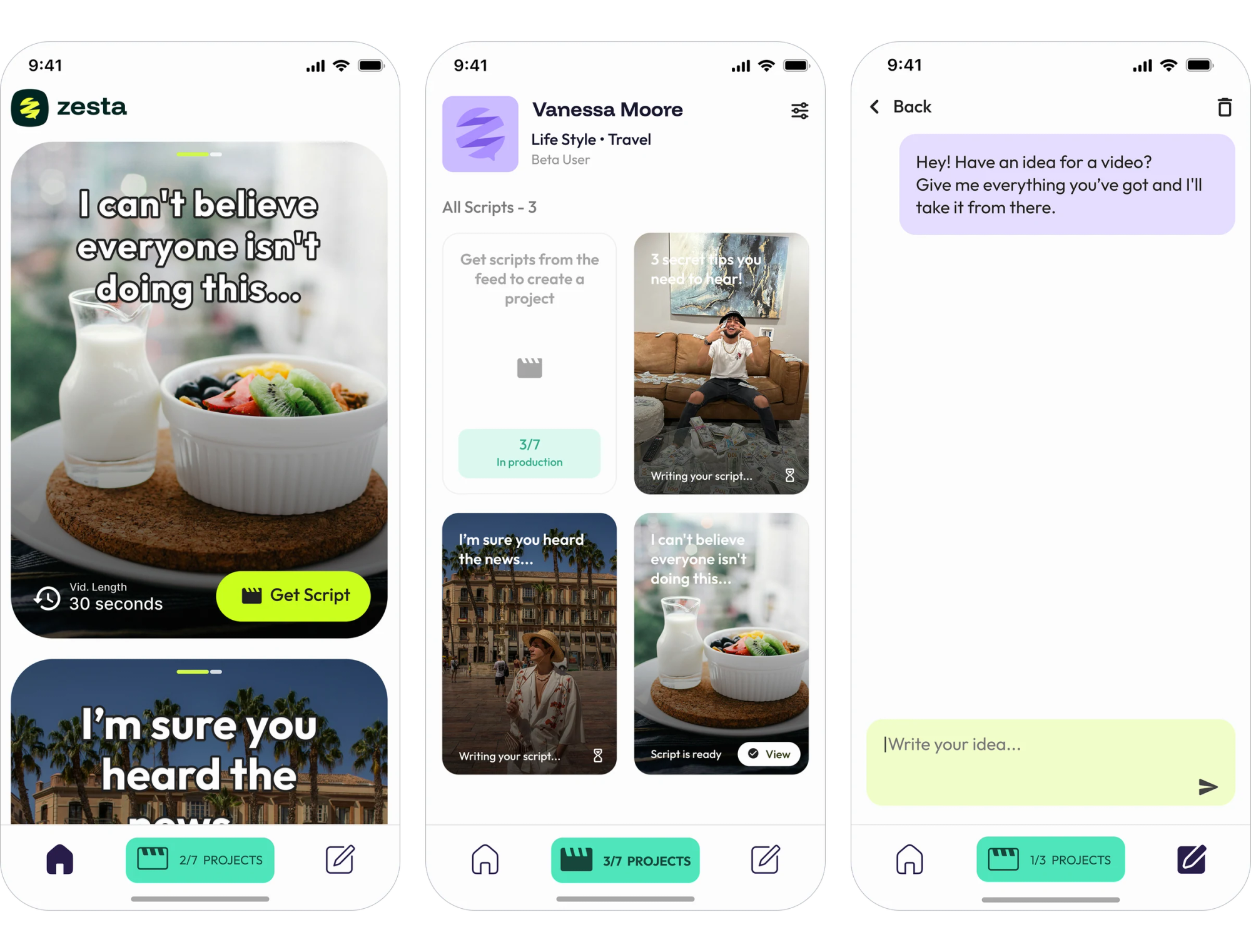
Users who started a video didn’t finish it, or didn’t make another
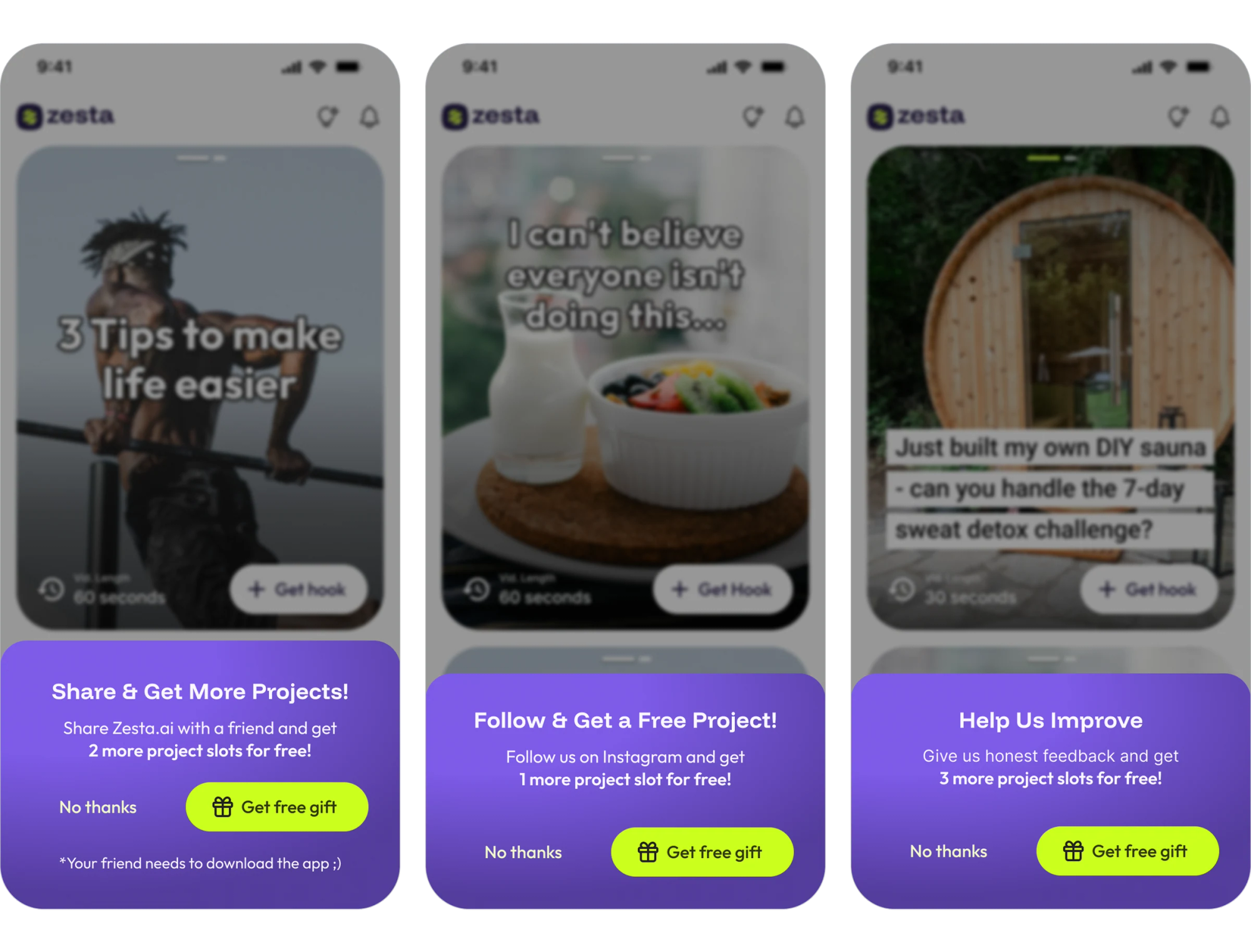
Two changes. First, I gamified the app with rewards for three tasks, each paid in free project slots: follow Zesta on Instagram (1 slot), share it with a friend who downloads the app (2 slots), or write honest feedback (3 slots). More slots keep people making videos and coming back. Each task also gave Zesta something it needed: downloads, Instagram followers and user feedback.
Second, we updated the AI to write more compelling hooks. A better first line makes people want to film it.
Monetization: a paid tier in an app everyone used for free
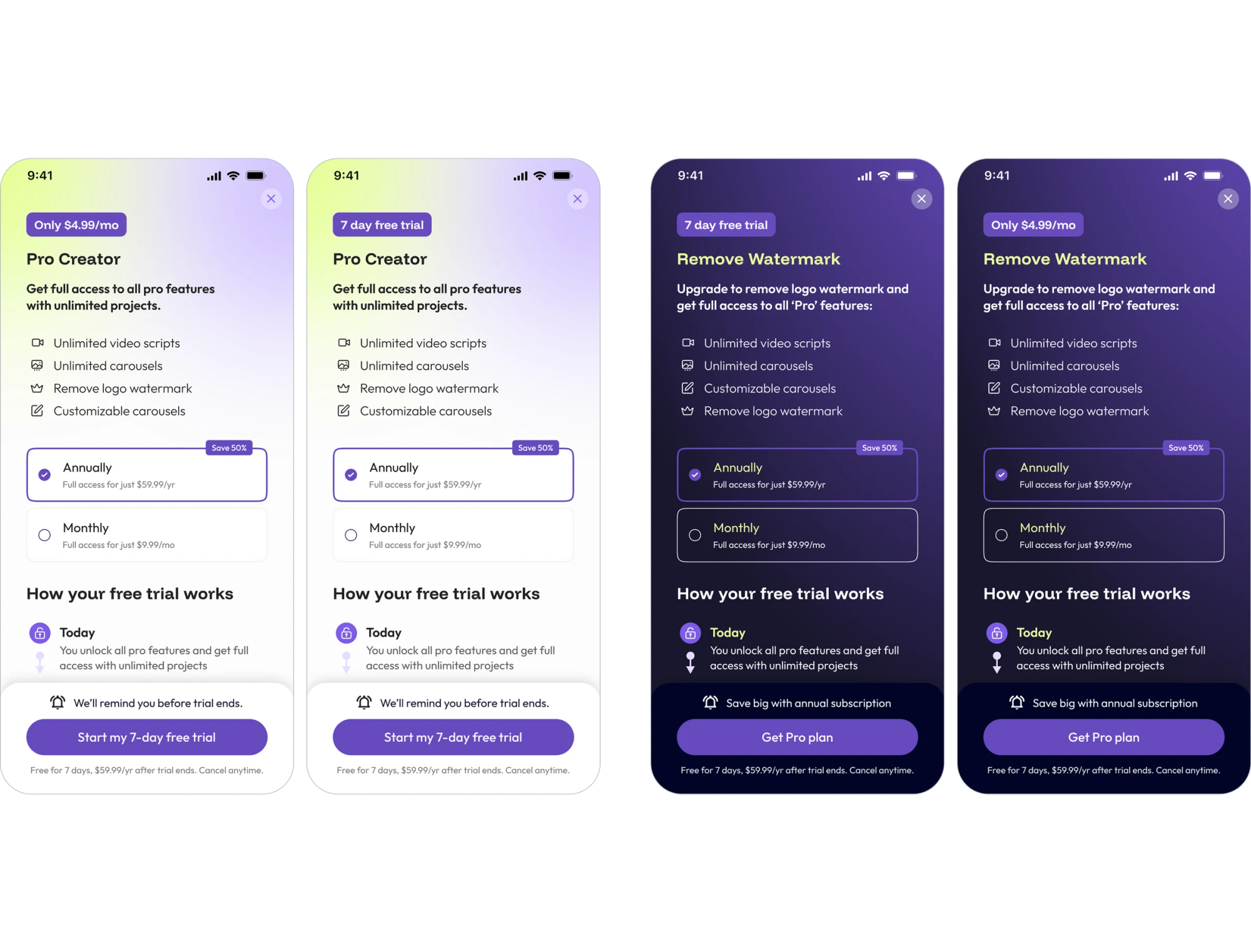
The problem wasn’t that users didn’t want to pay. Paying was new: until then, everyone had used Zesta for free. So the question was how to create a Pro tier worth paying for without hurting free users, especially the ones already active in the app.
Free users keep every existing feature, with a usage limit: enough for a new user to get hooked on making content. New features go into Pro, along with unlimited use and no watermark, so Pro always has something you want.
A generic “Go Pro” screen asks people to value everything at once. So we built separate paywalls for specific moments, each with a call to action that matches it. A creator about to export with a watermark sees “Remove watermark”, and everything else in Pro comes as a bonus. On both paywalls, we A/B tested how the offer opened: with the price, or with a 7-day free trial and a reminder before it ends.
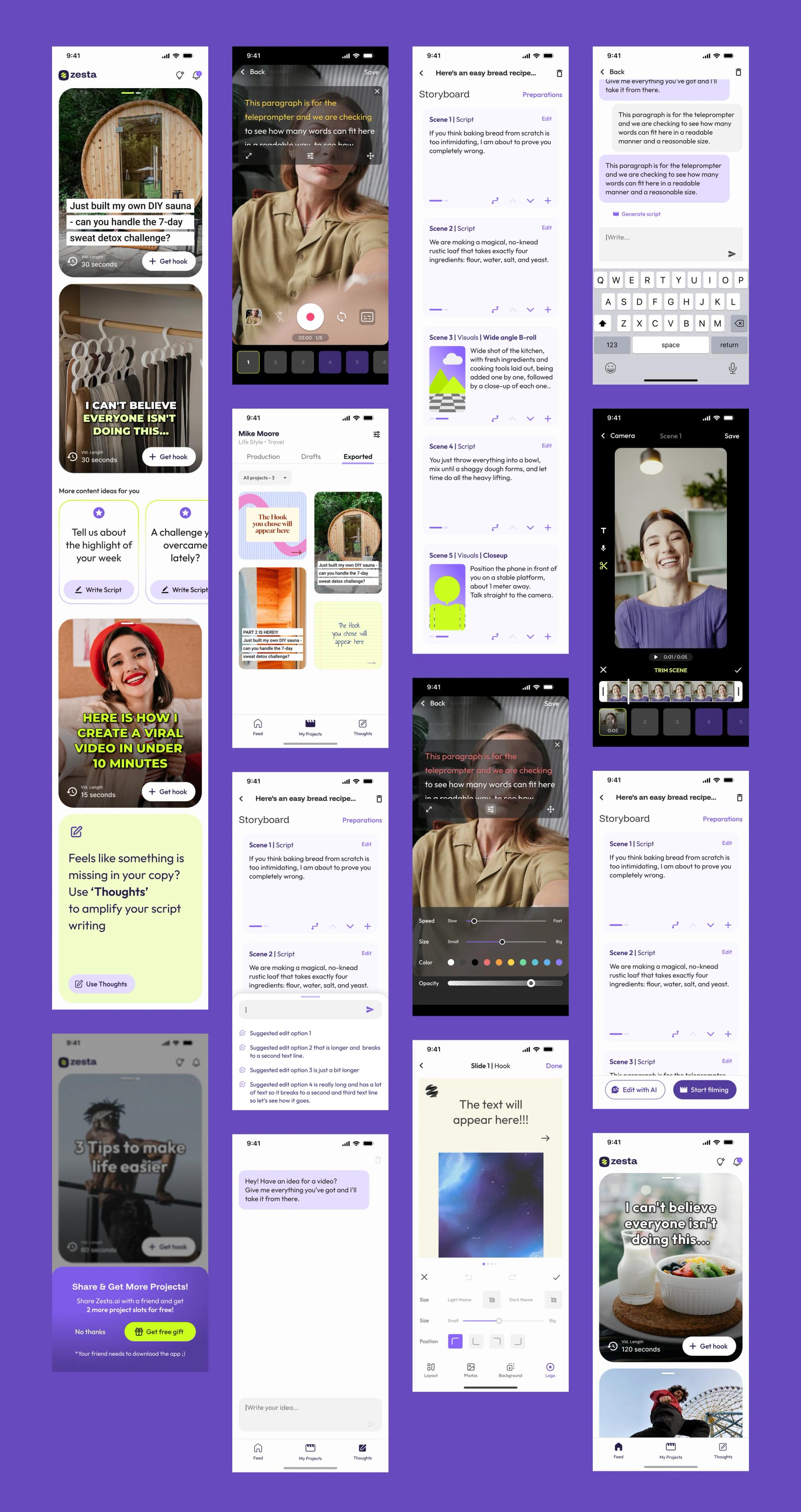
The whole app
What I’d do differently
The sign-up sits at the very start of onboarding, for two reasons. We needed an account to track free-plan limits, and connecting Instagram first meant the feed opened with hooks that already fit the creator's niche and style. That first look was our wow moment. But it came at a real price: that first step was where we lost the most people.
The test I'd run next moves sign-up later, right before filming or exporting. The positioning step, where creators pick their category and niches, already gives us enough to make the first feed feel personal, and connecting Instagram at sign-up can sharpen it from there. Free-plan limits can be tracked on the device until then. By the time we ask for an account, people have browsed hooks and started a script, so they have a reason to say yes.